
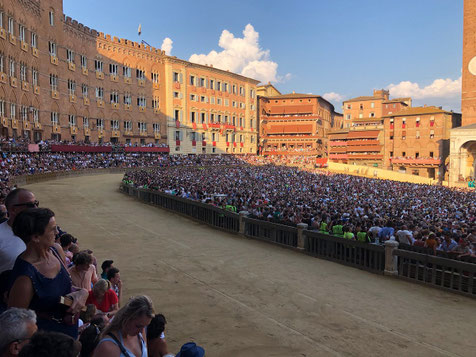
The renowned Palio di Siena race occurs twice each summer, on July 2 and August 16. During these four-day festivals, Siena bursts into vibrant colours, excitement, and tradition, ending with the famous horse race. The event takes over Siena’s main square, the Campo, and holds great importance for locals while also drawing many international visitors. The usually peaceful city centre becomes lively with flags, festivities, food, drink, processions, and horse racing as jockeys compete for their contrada’s victory.
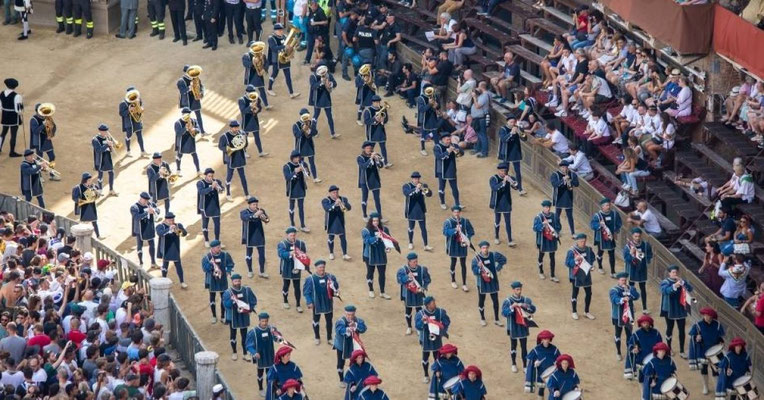
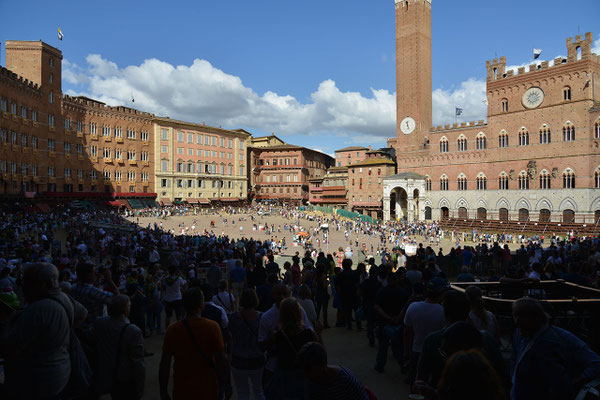
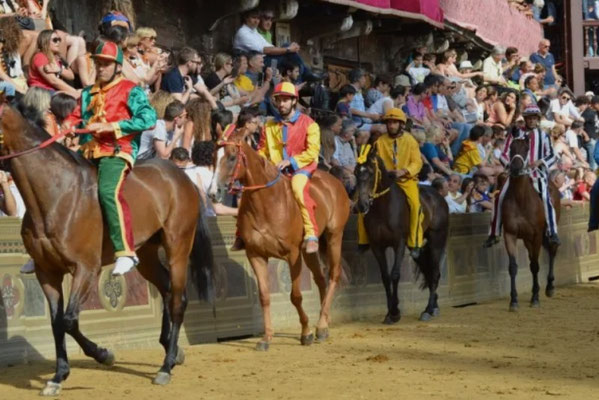
The festival's four days are marked by both civic and religious events that follow a strict schedule. The first event happens on the last Sunday in May and the Sunday after the July Palio. On these days, a draw assigns contrade (neighbourhoods) to participate in the July and August races. The Palio itself lasts four days: from June 29 to July 2 for the Provenzano race, and from August 13 to 16 for the Assumption race. The first day, June 29, and August 13 feature numerous events. Early mornings in the Palazzo Pubblico see the marking of horses for the ‘batterie di selezione’ (qualifying heats). Horses compete in groups of six or eight around three laps of the square, after which ten captains meet with the mayor to select the ten horses for the Palio.
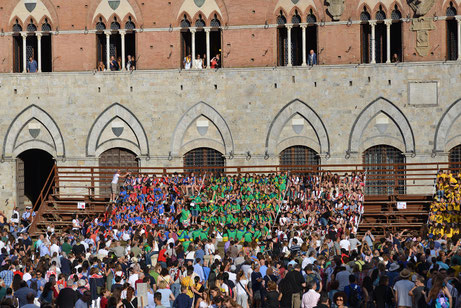
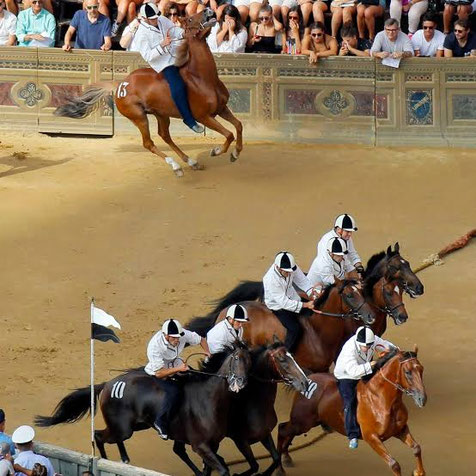
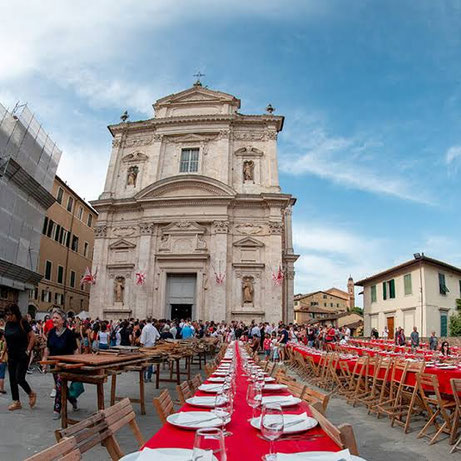
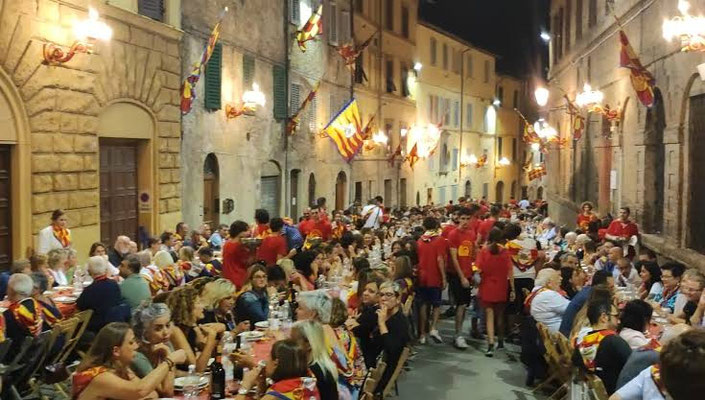
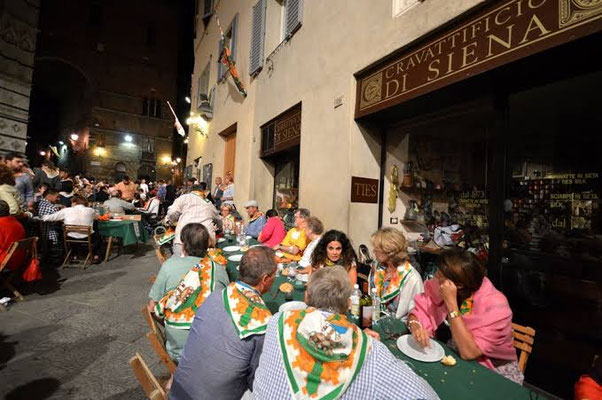
On July 1 and August 15, the day before the race, locals and visitors gather in Piazza del Campo for two additional trials. That evening, a historical parade takes place, and the Palio banner is blessed by Siena’s Archbishop. After the blessing, the 'Prova Generale' (Grand Rehearsal), the most crucial trial, occurs, where contrade choose their jockeys. The night before the Palio, the city streets fill with people enjoying the Cena della Prova Generale, a festive street dinner where tables cover the cobblestones, and everyone shares food and wine to celebrate.
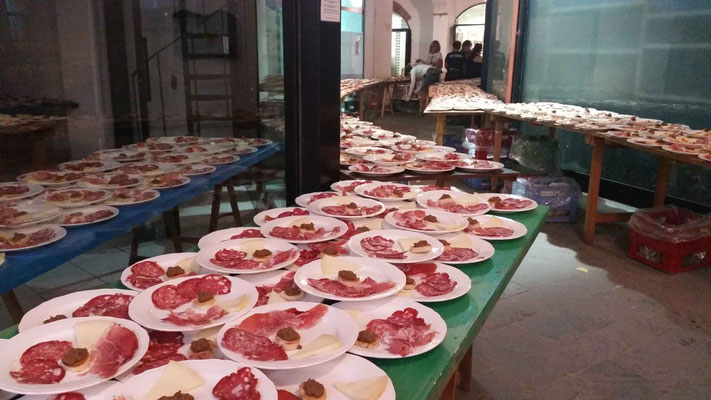
The "Dress Rehearsal Dinner" occurs the night before the Palio di Siena in each *Contrada* (district). It features a four-course traditional Tuscan and Sienese menu—paired with local wine—amid singing, drumming, and strong community spirit. Typically, it includes: Appetiser: Tuscan cured meats like *prosciutto*, *finocchiona*, and *capocollo*, along with *crostini* (including the classic *crostini neri* with chicken liver pâté). First course: Dishes such as *pici all'aglione* (thick pasta with garlic sauce), *pappardelle* with wild boar ragù, or popular choices like *amatriciana*. Main course: Local meats, including grilled cuts, wild boar stew, or mixed roasts. Side: Seasonal vegetables or fresh salad. Dessert: *Cantucci* (almond biscuits) with *Vin Santo* or other traditional dry pastries.
Write a comment