

Not just a machine, but an architecture: A closer look at the moka, Italy's iconic design masterpiece. Recently featured at the Winter Olympics opening ceremony, the moka stovetop coffee maker showcases a unique blend of aesthetics and functionality. The event highlighted colourful moka coffee makers alongside symbols of Italian culture, including Pinocchio and Renaissance art, performed in striking monochromatic costumes. Every Italian home likely has a moka, also known as a caffettiera. While modern coffee machines have gained popularity, the classic moka remains a cherished ritual for many Italians and coffee lovers worldwide.
The moka coffee maker consists of three main parts: a water pot, a filter for ground coffee, and a top vessel. When filled and placed on the stove, the device generates pressure that forces water through the filter, producing coffee and a distinctive sound valued by enthusiasts.
While various moka prototypes were tested in 19th-century Europe, it was Italian Alfonso Bialetti who popularised the design in the 1930s. After training in French aluminium factories, Bialetti established a workshop in Northern Italy in 1919. He collaborated with designer Otello Amleto Spadini to perfect the moka design, eventually launching it in the mid-1930s and obtaining a patent in 1946. The moka is named after the Yemeni city of Mokha, known for its coffee production. The design proved to be so popular that, eighty years later, Bialetti continues to produce its Moka Express, which has remained unchanged. This enduring appeal attests to its intuitive design and utilitarian aesthetic.
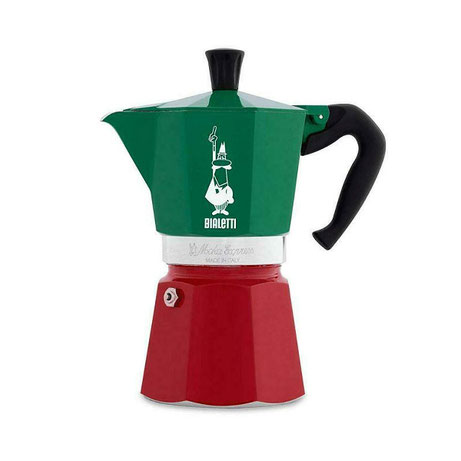
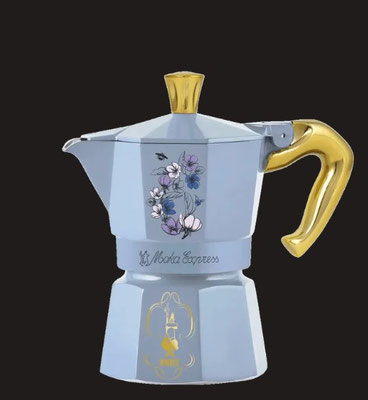
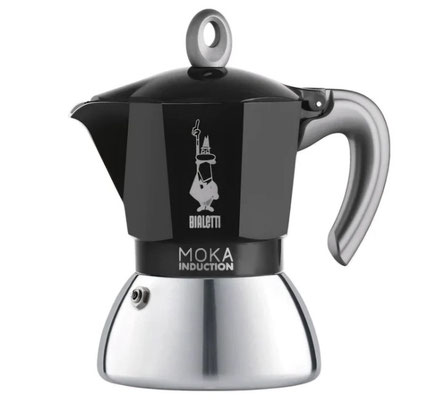

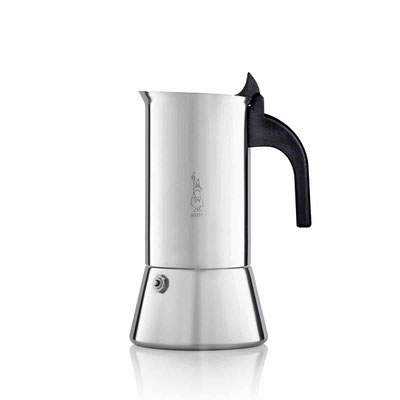

Bialetti is a prominent brand in coffee maker design, and over the years, various designers and architects have created their interpretations of the moka machine. Alberto Alessi, Bialetti's grandson, played a key role in elevating the moka to design icon status by collaborating with renowned designers like Michele De Lucchi and Aldo Rossi. Designer Giulio Iacchetti noted that 1979 was a significant year in coffee maker design, highlighted by Marco Zanuso’s Carmencita moka and Richard Sapper’s 9090 coffee maker for Alessi, both of which are milestones in the history of the moka.
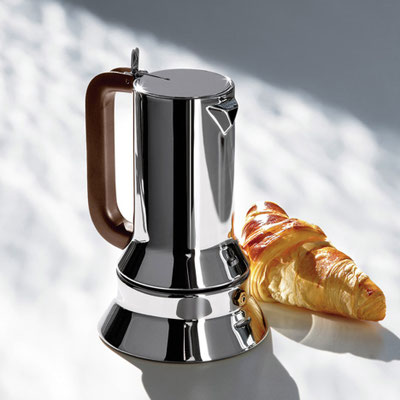
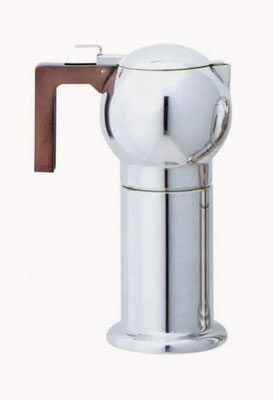

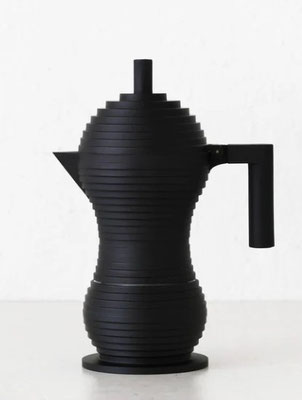
The design of a caffettiera captivates designers and architects alike. Italian architect Alessandro Mendini observed in 1979 that "the coffee maker isn't just an object; it's a true work of architecture," highlighting its blend of aesthetics and functionality. He noted that creating a coffee maker is akin to designing a monumental building, encapsulating a ritual through a sophisticated machine. Notable examples include the Accademia, crafted by Ettore Sottsass and Matteo Thun in the 1980s, and Cini Boeri's Opera for La Pavoni from 1989, both prized by collectors. Gaetano Pesce's moka design for Zani & Zani in the late 1980s features a unique base and a resin top shaped like an erupting volcano, symbolising the coffee-making process. Alberto Alessi's coffee maker collection features ultra-functional designs alongside daring creations, such as Riccardo Dalisi's extravagant Coffee Pot with Heart and Stars, inspired by the traditional Neapolitan drip brewing method. "Coffee is more than just a drink; there is a ritual involved each time you prepare it with a moka pot," noted Iacchetti. The traditional Italian coffee maker combines daily rituals and family gatherings with exceptional design, symbolising design excellence, entrepreneurial vision, and practicality.
The Moka Caffetiera in Gold
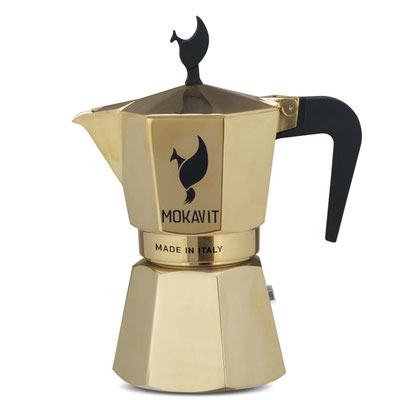

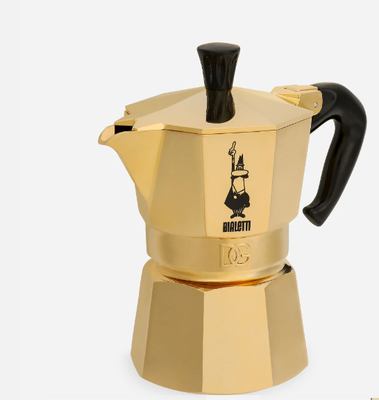
If you feel very passionate about your Moka, you might even opt for a gold version of the Moka Caffetiera. The one from Mokavit is still affordable; where as the Dolce & Gabbana Version truely exclusive. The MOKAVIT QUEEN 24K is an exclusive moka pot coated in 24-carat gold, blending timeless elegance with functionality. This luxurious piece not only brews exceptional coffee but also enhances any kitchen with its refined and prestigious appearance. It's perfect for coffee lovers who value quality and unique design, making it a true celebration of taste and style.This extraordinary tribute to the luxury of gold features the Bialetti Dolce&Gabbana decorative Moka, showcasing the maison's commitment to opulent materials and exquisite design. With contours reminiscent of Art Deco, the Bialetti Moka Express is an undeniable Italian icon and is now part of the permanent collection at the Museum of Modern Art (MoMA) in New York. In this special edition, it has been elevated to a collectible item, plated with 24k gold and presented in an elegant display case. The case, finished with a glossy lacquer and adorned with 24k gold logos, opens with a handle shaped like the famously mustached Bialetti figure known as “Omino con baffi.” Inside, the fully mirrored interior showcases a 24k gold-plated Bialetti Dolce&Gabbana Moka Express, featuring a polished handle and knob. This masterpiece is crafted from an exclusive mold that includes an embossed logo of the maison.
Write a comment